
Tile Surfaces That Stay Level and Sealed
Tile Installation in Lufkin for kitchens, bathrooms, and floors needing durable, moisture-resistant surfaces
Moisture from showers, spills near kitchen sinks, and tracked-in water from entryways all create conditions where tile performs better than carpet, laminate, or hardwood. Professional tile installation addresses these exposure risks while providing a surface that's easy to clean and resistant to staining. The work involves careful layout planning to minimize small cuts at visible edges, substrate preparation to ensure tiles bond securely without cracking, and precision installation that keeps grout lines consistent and level transitions smooth across floors, shower walls, backsplashes, and entryways.
C&D Services installs tile in kitchens, bathrooms, and remodeling projects where durability and moisture resistance are priorities. Substrate conditions are evaluated before tile is set—plywood subfloors may need reinforcement to prevent flexing that cracks grout, and shower walls require waterproof membranes behind the tile to prevent water from reaching framing. Layout planning determines where full tiles are placed and where cuts occur, with the goal of avoiding narrow slivers at doorways or along visible edges where they look unfinished.
Schedule a consultation to review tile options, discuss layout patterns, and plan installation for your kitchen, bathroom, or entryway project.
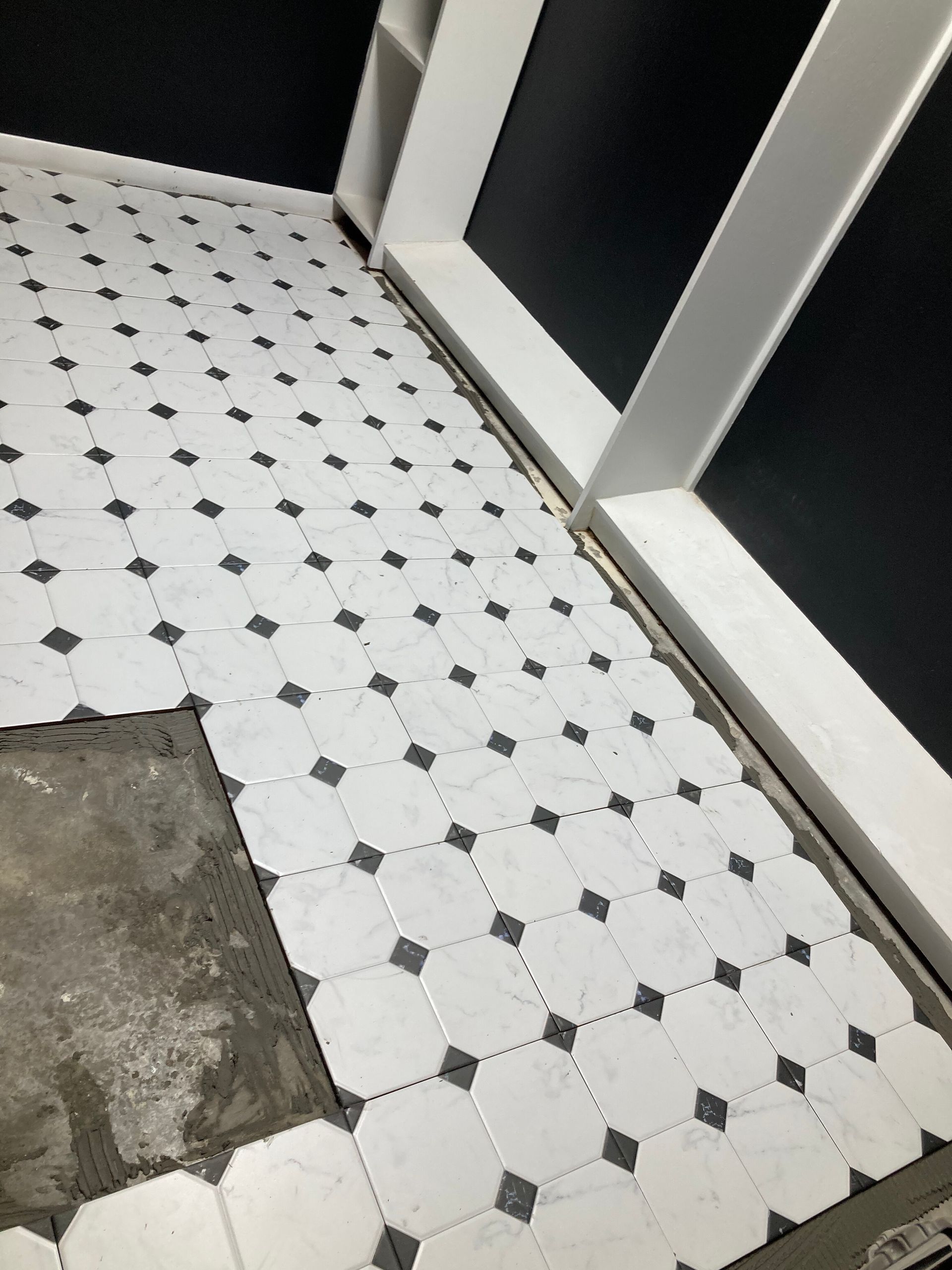
What You Notice Once Tile Installation Is Finished
Tile installation begins with surface preparation—floors are checked for level, walls are confirmed plumb, and any dips or humps are corrected before tile is set. Thinset mortar is applied in consistent layers to bond tiles to the substrate, with spacers used to maintain uniform grout lines. In eastern Texas, humidity and temperature swings mean that grout and thinset must cure properly before the surface is exposed to water, or the bond can weaken and tiles may lift or crack over time.
Once installation is complete, tile surfaces sit level without loose or hollow-sounding tiles, grout lines run straight and consistent, and transitions to adjacent flooring are flush without tripping hazards. Shower tile is sealed properly so water doesn't seep behind the surface, and backsplashes fit tightly against countertops without gaps where moisture can collect. The finished surface handles spills, splashes, and foot traffic without staining, peeling, or warping the way softer flooring materials might.
Tile offers long-term value because it doesn't wear down under traffic, resists moisture damage, and can be cleaned with standard household products without special treatments or refinishing. Pattern and color choices range from neutral tones that blend with existing finishes to bold designs that define a space, with layout options including straight grid, diagonal, herringbone, or subway patterns depending on the room's shape and style.
Questions Before Starting Your Project
Homeowners planning tile installations often have questions about material selection, layout choices, and how the work fits into larger remodeling projects.
What areas of the home are best suited for tile?
Kitchens, bathrooms, entryways, and any space exposed to moisture or heavy foot traffic benefit from tile's durability and moisture resistance, while bedrooms and living rooms may use other flooring unless specific design preferences or pet-related concerns make tile preferable.
How is layout planned to avoid awkward cuts?
Full tiles are centered in visible areas like doorways or focal walls, with cuts placed along edges or in corners where they're less noticeable, and the layout is dry-fit before installation to confirm spacing and alignment.
Why does substrate preparation matter for tile?
Tile is rigid and doesn't flex, so any movement in the subfloor or wall will crack grout or cause tiles to lift, which is why floors are reinforced and walls are checked for plumb before tile is set, especially in Lufkin remodeling projects where older homes may have settling or moisture-related subfloor issues.
What's the difference between ceramic and porcelain tile?
Porcelain is denser and more moisture-resistant, making it suitable for showers and high-moisture areas, while ceramic is slightly softer and easier to cut but still durable enough for most residential floors and backsplashes.
When can the tile be used after installation?
Grout typically cures within 24 to 72 hours depending on humidity and temperature, after which the surface can handle light traffic, though heavy use or exposure to standing water should be avoided until the grout is fully cured and sealed to prevent staining or water penetration.
C&D Services completes tile installations with attention to layout precision, level surfaces, and proper sealing, ensuring floors, showers, and backsplashes provide lasting performance and a clean, finished appearance. Discuss your tile project and explore material options during a consultation tailored to your remodeling needs.